The Philosophy Behind Jurno
What we designed, why we designed it, and the principles that shaped our decisions.

Rea
· 7 min read

Jurno exists because of a problem we couldn't stop thinking about.
The research is clear: writing about your inner life improves mental and physical health. Sharing it — being heard, being witnessed — deepens those benefits. And kindness from strangers, freely given, carries a unique emotional weight that even close relationships sometimes can't replicate.
But the spaces we have for sharing — social media, public forums, comment sections — were built for engagement, not honesty. They collapse the full spectrum of audience into one. They reward performance and punish vulnerability. They turned sharing into a risk assessment.
We didn't set out to build an app. We set out to answer a question:
Everything that follows grew from that question.
The Principles
Private, but not secret
There are things we won't admit, even to ourselves. Feelings we haven't named. Thoughts we push aside because we're not ready to look at them. Journaling breaks that pattern. The act of writing something down — naming a feeling, acknowledging a thought, putting words to an experience — is the first and most fundamental act of opening up. You're sharing with yourself. You're turning toward the parts of your inner life that usually stay in shadow, and you're letting them exist on the page.
Jurno starts here. Before anything is shared with anyone, it's a journal. A private space to fill with what's real. You choose the prompt. You choose the format. You choose how deep you want to go.
Safe, but not silent
Silence is the absence of any chance to connect. Social media gave us the illusion of sharing while making real sharing feel dangerous. Jurno offers a different model: you can choose to share an entry anonymously, with no profile attached, no follower count, no public history. Your words stand on their own.
You choose a pen name — not a username. Pen names aren't unique. Multiple authors can share the same pen name, Virginia, Harper, or Shel, or whatever feels right that day. Just like the writers that have used pen names for centuries — George Orwell, Mark Twain, Elena Ferrante, the Brontë sisters.
They chose pseudonyms not to deceive, but to create distance between their identity and their honesty. To write without the weight of social expectation. The pen name is a mask in the theatrical sense: a permission structure. It lets you be more honest than you might be under your own name.
Geography creates intimacy without identity
Knowing that someone in São Paulo is reading your entry, or that someone in Osaka wrote the words you're reading — it creates closeness that doesn't require knowing someone's name. The warmth of shared humanity without the risk of social consequence.
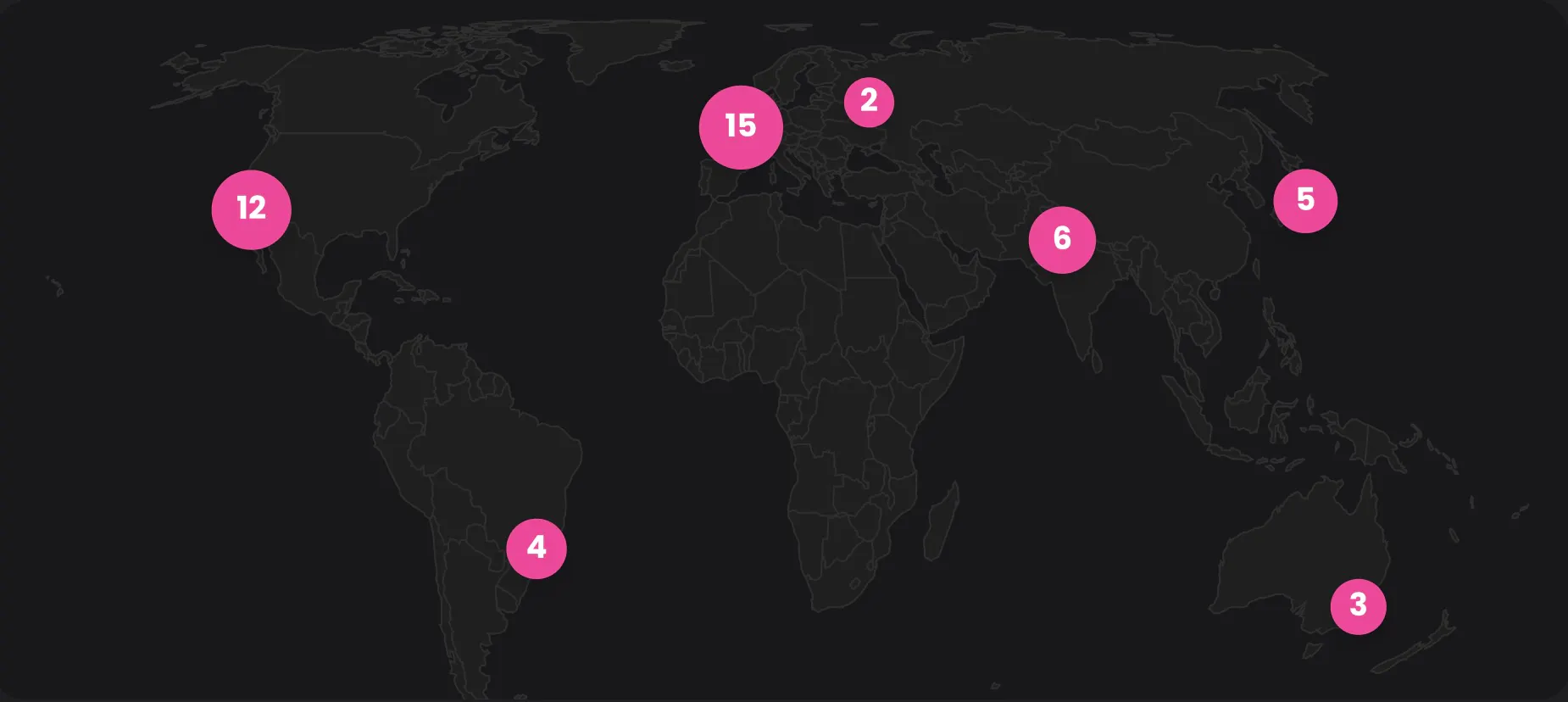
Jurno shows you a map of all the places your entries were read around the world, and when. The map also tracks where you’ve written from. Great for travelogues.
Over time, you may collect reads in other countries. You may read journals written from cities you’ve always wanted to visit. This creates a feeling of deep connectedness.
Open, but not judged
On social media, even responses carry engagement. Comments are public, which means every reply is shaped by the awareness that other people are watching. Even empathy ca feel performative. Criticism becomes a spectator sport.
On Jurno, responses are private letters. When someone reads your entry and writes back, that letter goes only to you. No one else sees it. There's no public thread. No pile-on. No audience for the response.
A stranger who writes you a letter has nothing to gain from doing so — no likes, no retweets, no upvotes. They're choosing to spend their time with your words, and then choosing to respond. That choice, made without pressure, is one of the most genuine forms of human connection the modern world can offer.
Create an Archive, Not Just a Journal
By writing honestly about how we feel right now—the fears, the joys, the small aches—we create a record that future generations can use to understand what it actually felt like to be human during this moment. We are both reflecting and documenting. Not through the eyes of celebrities or historians, but through the unfiltered inner lives of ordinary people living it.
We challenge the notion that history is written by the winner. In today’s age, having a voice is a human right. And what is remembered, should be democratic and distributed, not selected by a powerful few.
Deliberately un-curated
There is no algorithm on Jurno. What you see isn't ranked by engagement, optimized for retention, or surfaced because a system predicted it would keep your attention.
What you encounter is serendipitous.
This matters more than it might seem. When an algorithm delivers content, there's always the question: why am I seeing this? The answer is always the same — because the system calculated it would keep you on the platform. That knowledge, even subconscious, colors how you receive everything. With the rise of social platforms, we lost the magic of true randomness.
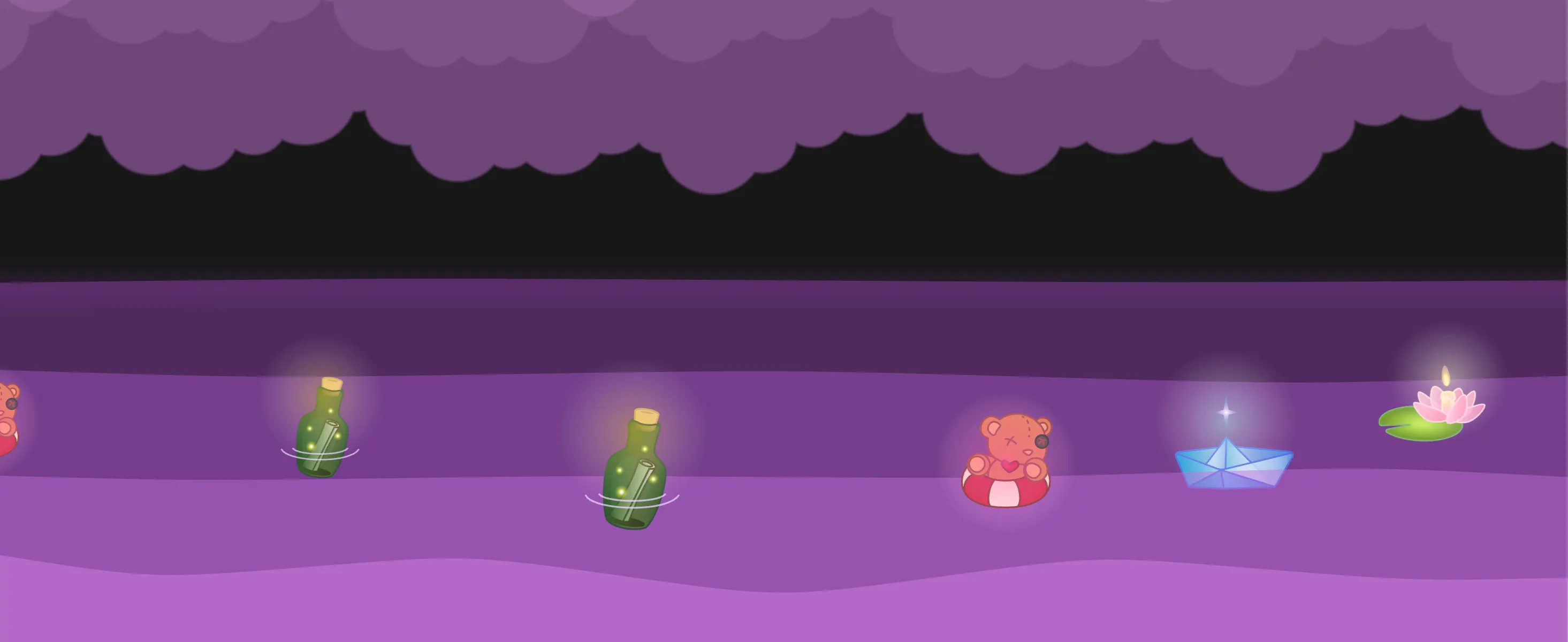
Journals flow through your screen, and you choose which to open. So when a stranger's entry resonates, it feels particularly serendipitous. And because others discover your entry in the same way, the perception of whatever kindness follows feels more real. It wasn't engineered to happen. It just did.
Help a stranger, helped by a stranger
The research on altruism shows something that most digital platforms overlook: helping others produces measurable well-being in the helper. Dopamine. Serotonin. A stronger sense of purpose. And these effects are amplified when the help is freely chosen and directed at a stranger.
Jurno is designed so that every user is both writer and witness. You can share your own experience, and you can read and respond to others. The person who writes a letter to a stranger at 2 AM is doing something meaningful for that stranger — but they're also doing something meaningful for themselves.
This isn't an add-on feature. It's a core design principle. The space works because giving and receiving happen in the same place, through the same act.
What We're Not
Jurno is not social media. There are no profiles, no feeds, no engagement metrics, no virality mechanics.
Jurno is not therapy. It can complement therapy, and many of the principles behind it are informed by therapeutic research, but it's not a clinical tool and doesn't pretend to be.
Jurno is not a replacement for close relationships. Friends, family, partners — those bonds matter enormously. Jurno exists alongside them, fulfilling a different part of the spectrum.
Jurno is not promising to fix anything. It's offering a practice. A space to show up honestly, again and again, and to discover what happens when sharing is safe. We discover together.

How It Works
The practice works in three movements.
Own our truth. We notice what's happening inside — a feeling, a thought, an experience — and we write it down. We don't filter it. We don't judge it. We let it be what it is. This is journaling in its simplest and most powerful form: breaking the secrecy by being honest with ourselves.
Choose to share. The word choose matters. Not every entry needs to be shared. But the option is always there. And when you share, you're not broadcasting. You're placing your truth in the world, anonymously, with no expectation of response. Even without a reader, you've broken the silence with the courage to be truly seen
Find resonance. We read what others write. We see that vulnerability comes in many forms — different lives, different circumstances, but the same human emotions. We recognize ourselves in someone else's words. They read ours. A feedback loop begins. Their honesty deepens our own. Our honesty gives them permission to go deeper. And what was once collective judgment — the default mode of social media — begins to shift toward collective understanding. And long after we write these words, someone else — maybe weeks from now, maybe years — will read them and think: I never knew what it felt like to be in the US spring of 2026. And somehow this person understood exactly how I feel now.
What We Believe
We believe that writing is one of the most powerful tools for self-understanding.
We believe that sharing your truth should feel freeing, not performative.
We believe that anonymity, designed well, protects vulnerability rather than enabling cruelty.
We believe that kindness from a stranger — freely given, with nothing to gain — carries an innate warmth that no algorithm can manufacture.
We believe that the impulse to be known — the same impulse that drove Augustine to confess, Rousseau to bare himself, pandemic journal writers to say I'm not okay — is still alive. It just needs a safer place to land.
And we believe that some of the best things in life happen by chance. A letter from a stranger who understood. A journal entry that put words to something you couldn't name. A moment of connection you didn't see coming.
We built Jurno to make those moments more possible.
Jurno is a journaling platform built for daily reflection and anonymous sharing. Learn more at jurno.app →
Read the two-part research and inspiration behind our philosophy, continued here.
About the Author
Hi! I'm Rea. I write, draw, and code out of my studio in LA. I research and ponder wellness, expression, and the science of belonging.


